
Our thinking
Our thinking examines the structural shifts shaping Finland–India engagement — helping leaders act with clarity in a changing global landscape.
CORRIDOR INTELLIGENCE
Our perspectives

The Global Race for India's Pie: How Finland Can Seize Its First Foothold
Finland already possesses what many larger nations lack: a trusted political relationship with India, genuine technological complementarities, a world-class innovation ecosystem, and the institutional scaffolding upon which to build. What is needed now is the ambition to match the opportunity and the institutional commitment to see it through. The race is on. The question is whether Finland will sprint or continue to jog.
READ MORE
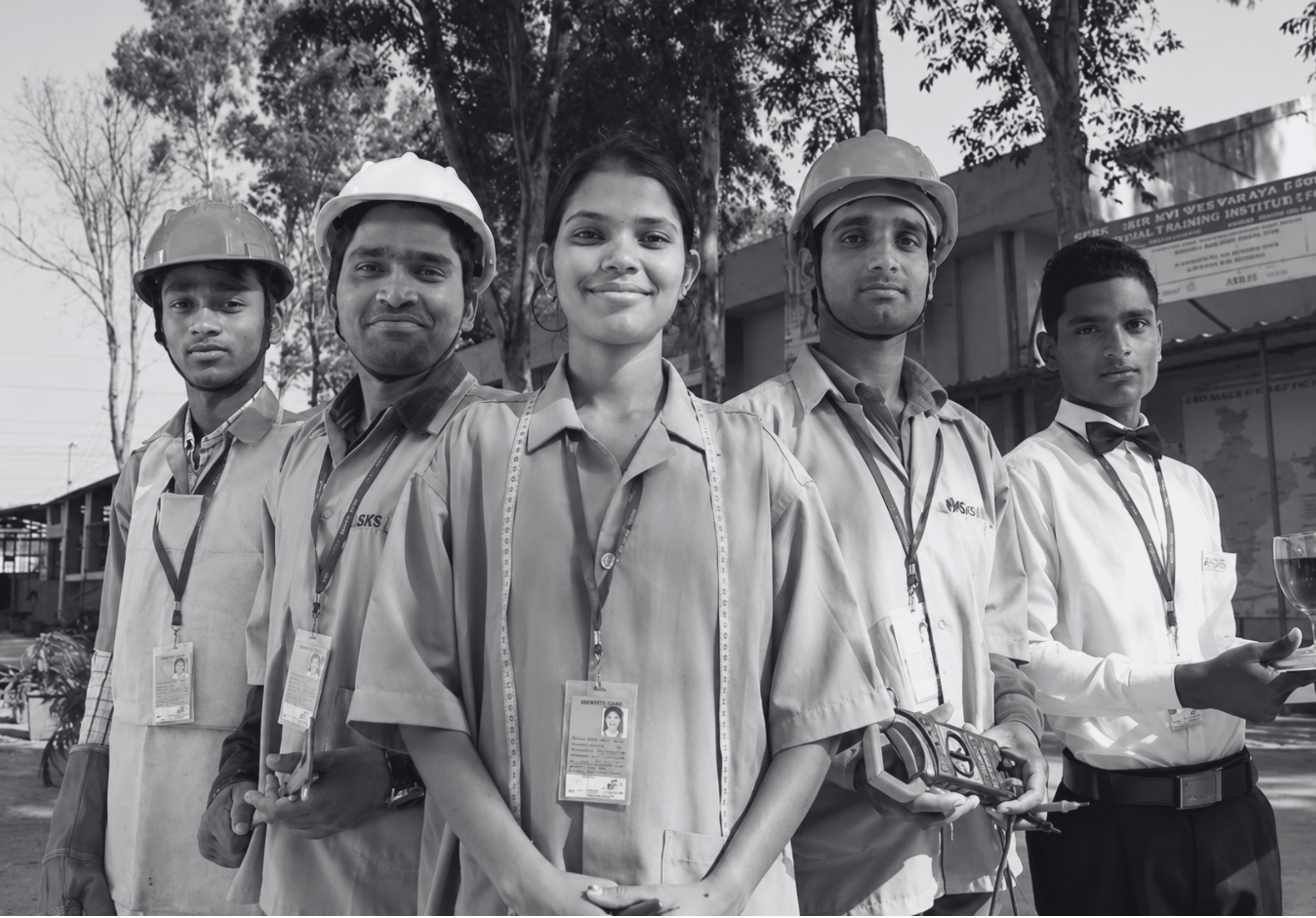
Finland’s Next Talent Question Is Blue- and Grey-Collar, and India may hold the answers
Finland’s labour debate often focuses on specialists, students and start-up talent. But the next serious workforce question may be more practical: how to build ethical, employer-ready pathways for skilled blue- and grey-collar workers from countries such as India.

India-Nordic Summit 2026: Why Finland’s India Opportunity Has Become More Serious
The India-Nordic Summit 2026 marks a turning point in the Finland–India relationship. Beyond headlines, a deeper economic corridor is emerging across digitalisation, circular economy, green transition, AI, advanced manufacturing and talent mobility.
READ MORE
Tariff Zero Isn’t the Win: Why the EU’s Textile Rules Are Becoming the Real Barrier for Indian Exporters
The corridor is shifting from a “trade corridor” to a circular-compliance corridor because the EU is redefining used textiles as regulated waste and tightening non-OECD waste shipment permissions, making auditable sorting, traceability, and environmentally sound processing the new MSME entry points.

Same Container, Different Rules: What Indian Textile Exporters Must Know Before Shipping Rugs or Curtains to Finland
Indian textile exporters face fragmented EU regulations—different HS codes, duty rates, and compliance rules for similar products such as rugs and curtains entering Finland. This article explains what exporters must prepare for before the EU-India FTA changes the economics.
Access Is Not the Same as Outcomes: Why the EU–India FTA Will Be Won or Lost in Execution
Trade agreements increasingly operate in an environment where tariffs are no longer the principal barrier to cross-border commerce. Instead, outcomes are shaped by regulatory systems, institutional capacity, and firms’ ability to manage complexity across jurisdictions.
INSIGHTS & PUBLICATIONS
Our research and guides
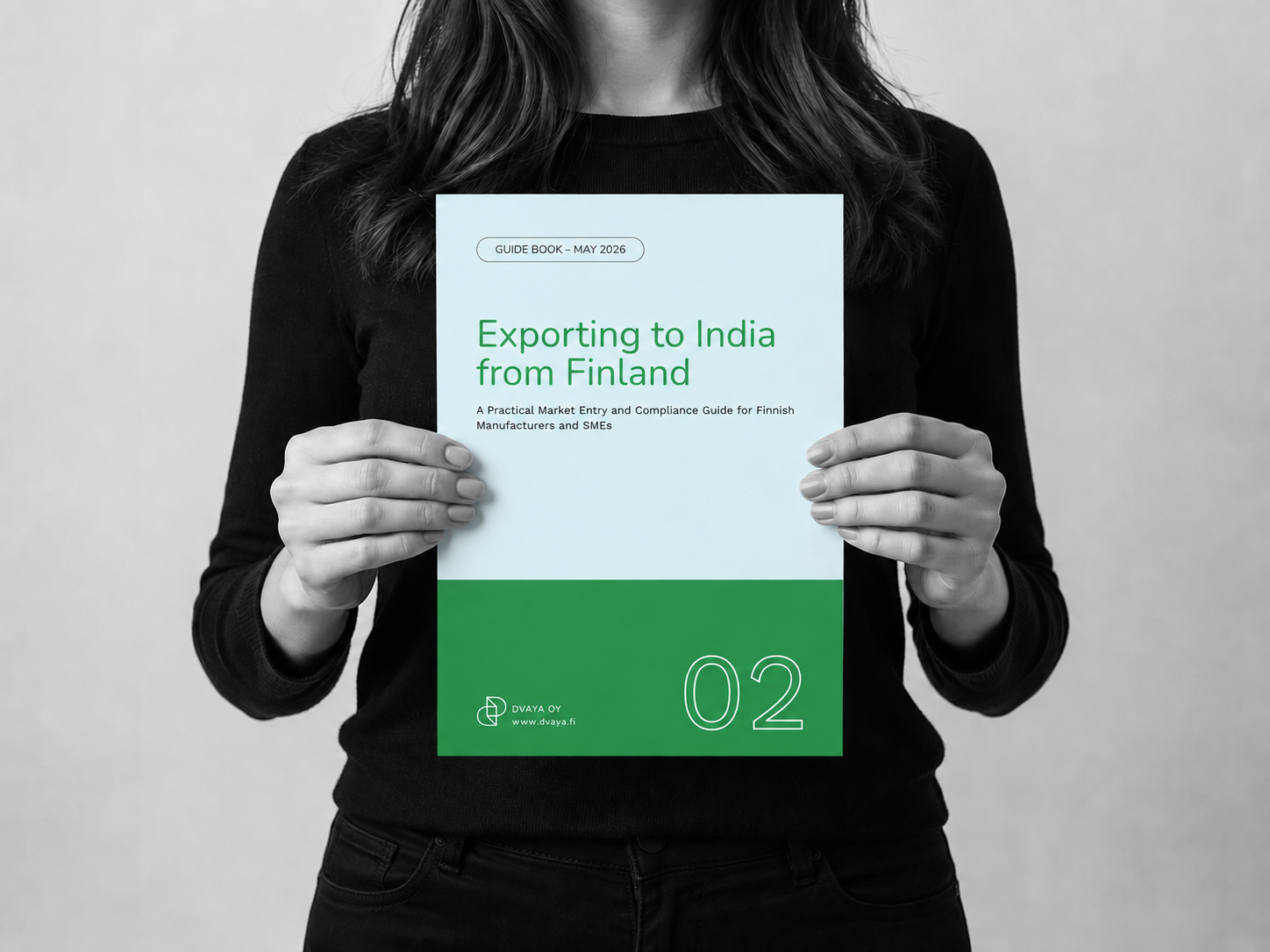
GUIDE BOOK 02
Exporting to India from Finland
A Practical Market Entry and Compliance Guide for Finnish Manufacturers and SMEs.
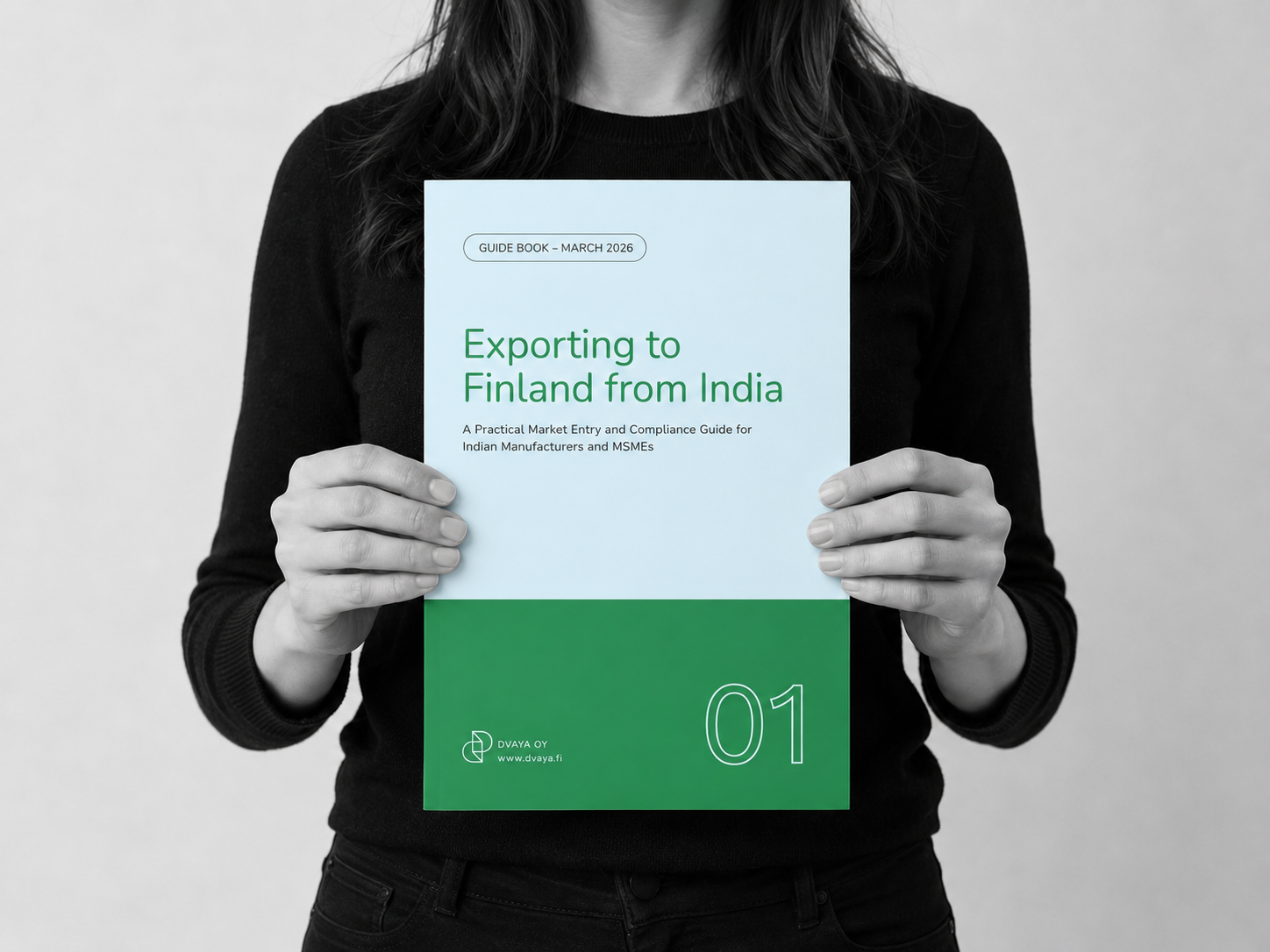
GUIDE BOOK 01
Exporting to Finland from India
A Practical Market Entry and Compliance Guide for Indian Manufacturers and MSMEs.
EARLY CONCEPTS AND PROVOCATIONS
Emerging areas of inquiry
These areas reflect questions we believe will shape the next phase of Finland–India engagement.

Cross-Border Strategy
Examining how organisations enter new markets, structure partnerships, and scale innovation across borders.
-
An iconic Indian natural skincare brand is exploring the Nordic market. Dvaya helps localize their offering, align with EU cosmetic regulations, and design pop-up collaborations with Finnish wellness brands rooted in nature and minimalism.
-
Drawing lessons from Japan’s TITP program, this case examines how India–Finland partnerships can be structured for ethical, scalable, and skills-aligned workforce integration.
-
Beyond products and services—what does it mean to export cultural leadership, sustainable business philosophies, and mindful practices as part of a cross-border strategy?

Systems Transformation
Understanding how institutional, economic, and social systems evolve — and where strategic intervention becomes possible.
-
A systems-level look at how platform-based economies can create equitable digital infrastructure for small businesses, with potential implications for Nordic markets.
-
What does the immigration pipeline reveal about workforce systems, integration challenges, and policy gaps? A data-informed systems analysis of migration trends and their ripple effects.
-
A Finnish cleantech startup seeks Indian municipal data to test its AI-based waste sorting tech. Dvaya helps align the startup’s pilot with Indian smart city goals, equity concerns, and local informal waste economies.

Society & Inclusive Economies
Examining how demographic shifts and social infrastructure shape the long-term resilience of cross-border economies.
-
An Indian company building gender-sensitive mobility tools for urban safety explores partnership with a Finnish city working on inclusive transport. Dvaya enables a peer-learning framework and co-facilitated workshops with end users.
-
In a time of algorithmic bias and workplace automation, how can Finnish organizations embed anti-racist, inclusive practices into their digital transformation journeys?
-
This concept asks: What if skills partnerships were built not only for economic efficiency, but for dignity, belonging, and mutual growth?

Leading Across Systems
Exploring how leaders operate under conditions of institutional complexity, cultural nuance, and strategic uncertainty.
-
Inspired by Finnish transparency and Indian resilience, Dvaya hosts cross-cultural leadership labs for Nordic-Indian startup founders, focusing on ethical scale, conflict resolution, and values-aligned decision-making.
-
Dvaya creates a reflection-based training series for Finnish companies entering complex markets like India, using systems thinking, local storytelling, and conflict mapping to build readiness.
-
Inspired by initiatives like Sitra’s futures call, we examine how Finnish institutions are investing in long-term thinking and how others might do the same.