
Access Is Not the Same as Outcomes: Why the EU-India FTA Will Be Won or Lost in Execution
By Swarnakshi Luhach, Ishita Jain
The conclusion of the EU-India Free Trade Agreement marks a substantive shift in the formal architecture governing one of the world’s most significant economic relationships. After years of stalled negotiations, the agreement restores momentum to EU–India economic engagement and signals renewed political commitment to trade cooperation at a time of growing fragmentation in the global trading system. Yet, as with many contemporary trade agreements, the primary determinant of its economic impact will not be the breadth of its legal provisions, but the degree to which those provisions are translated into operational reality.
Trade agreements increasingly operate in an environment where tariffs are no longer the principal barrier to cross-border commerce. Instead, outcomes are shaped by regulatory systems, institutional capacity, and the ability of firms to manage complexity across jurisdictions. In this context, the EU-India FTA should be understood less as a mechanism that “opens markets” and more as one that reorders the conditions under which participation becomes viable. The agreement creates opportunity, but it does not distribute it evenly, nor does it guarantee that firms, particularly small and medium-sized enterprises, will be able to capture it.
Execution capacity as the binding constraint
The agreement significantly expands tariff liberalisation and services commitments on both sides, with staged implementation designed to accommodate sensitive sectors. On paper, this represents a broadening of access across goods, services, and investment-related activities. However, historical experience suggests that formal access often outpaces firms’ ability to use it. Preferential trade regimes routinely exhibit low utilisation rates, not because firms lack demand, but because the costs and risks associated with compliance exceed the benefits of tariff reduction.
This dynamic is especially pronounced in trade with the European Union, where regulatory requirements are stringent, enforcement is consistent, and tolerance for non-compliance is low. Firms must navigate product standards, conformity assessments, documentation regimes, and—where services or data are involved—complex governance frameworks. For many MSMEs, these requirements represent fixed costs that do not scale with shipment size or contract value. As a result, tariff advantages can be neutralised long before goods or services reach the market.
In this sense, execution capacity—not comparative advantage—becomes the binding constraint. Firms that can internalise compliance disciplines and absorb upfront costs are positioned to benefit early. Those that may remain formally eligible yet practically excluded.
The intermediary layer determines who participates
Between the legal provisions of the FTA and realised trade flows lies a dense intermediary layer comprising logistics providers, customs brokers, certification bodies, compliance platforms, and trade finance institutions. These actors play a decisive role in shaping both the cost structure and the risk profile of cross-border trade. Their processes determine how quickly goods move, how documentation is interpreted, and where liability ultimately sits when disputes arise.
Exhibit 1 illustrates this execution funnel, tracing the path from tariff liberalisation to realised trade. While legal access expands at the top of the funnel, friction accumulates at successive stages—rules of origin, conformity assessment, customs clearance, and post-market compliance. Empirical evidence from previous FTAs suggests that it is at these stages that participation thins out most sharply, particularly for smaller firms.
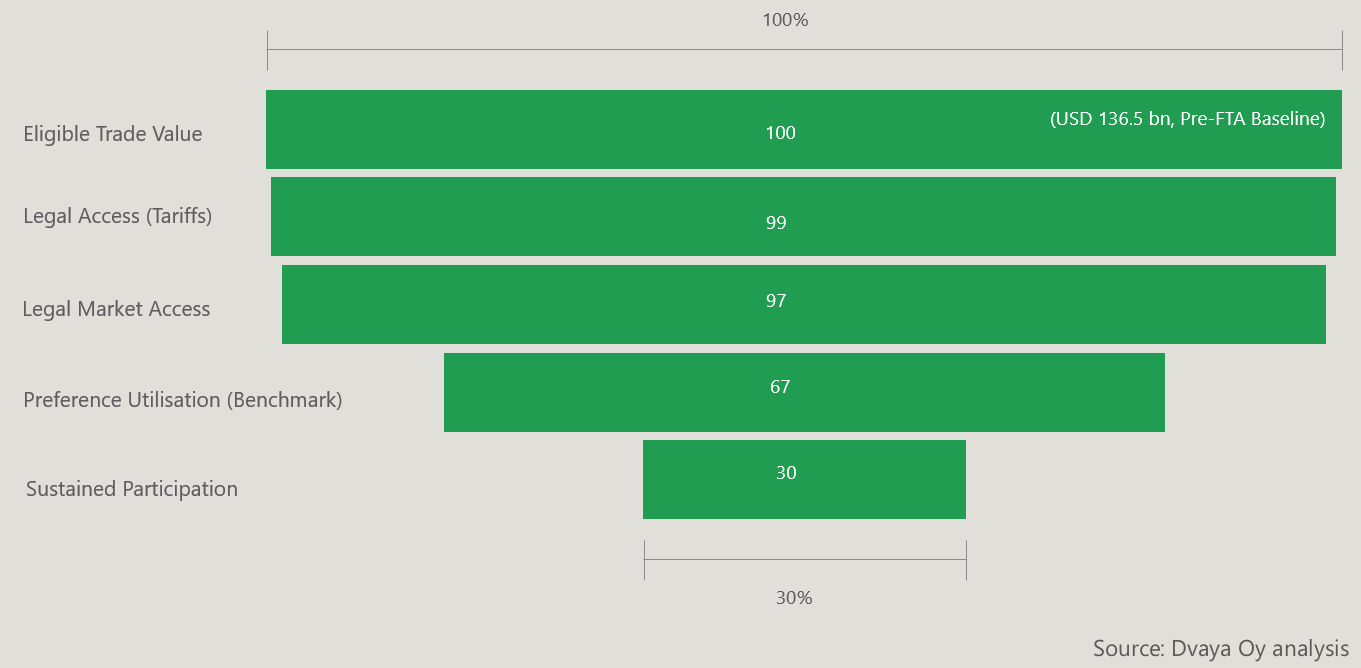
Exhibit 1: From Market Access to Market Participation
Where intermediary systems are fragmented or opaque, firms often respond rationally by forgoing preferential treatment altogether, trading under MFN terms to reduce audit exposure and operational uncertainty. In such cases, the economic value of the FTA accrues not to exporters, but to intermediaries capable of managing complexity at scale.
Time, asymmetry, and the distribution of gains
The effects of trade agreements unfold over time, and the distribution of gains is rarely symmetric in the early years. In the initial phase following entry into force, benefits tend to accrue to firms that are already embedded in EU-aligned regulatory environments or possess the organisational maturity to adapt quickly. Larger enterprises, or MSMEs operating as suppliers within established value chains, are therefore likely to capture a disproportionate share of early gains.
Broader participation depends on whether execution systems adapt. Digitalisation of customs procedures, standardisation of documentation, and the emergence of aggregation models that spread compliance costs can gradually lower barriers for smaller firms. Absent these developments, the agreement risks reinforcing existing concentration patterns rather than broadening participation.
From intent to outcome
The EU–India FTA reflects a clear shift in political intent toward deeper economic integration. Whether this intent translates into durable commercial outcomes will depend on less visible, but more consequential factors: the usability of rules of origin, the predictability of enforcement, the cost of compliance, and the capacity of firms and institutions to operate within complex regulatory systems.
In this respect, the agreement should not be judged solely by its legal ambition. Its success will be measured by the extent to which execution mechanisms evolve to support participation beyond a narrow set of already-capable actors. For policymakers, firms, and intermediaries alike, the central challenge is the same: turning legal access into a commercial reality.
Author(s)
Swarnakshi Luhach, Principal
Ishita Jain, Strategic Partner
